
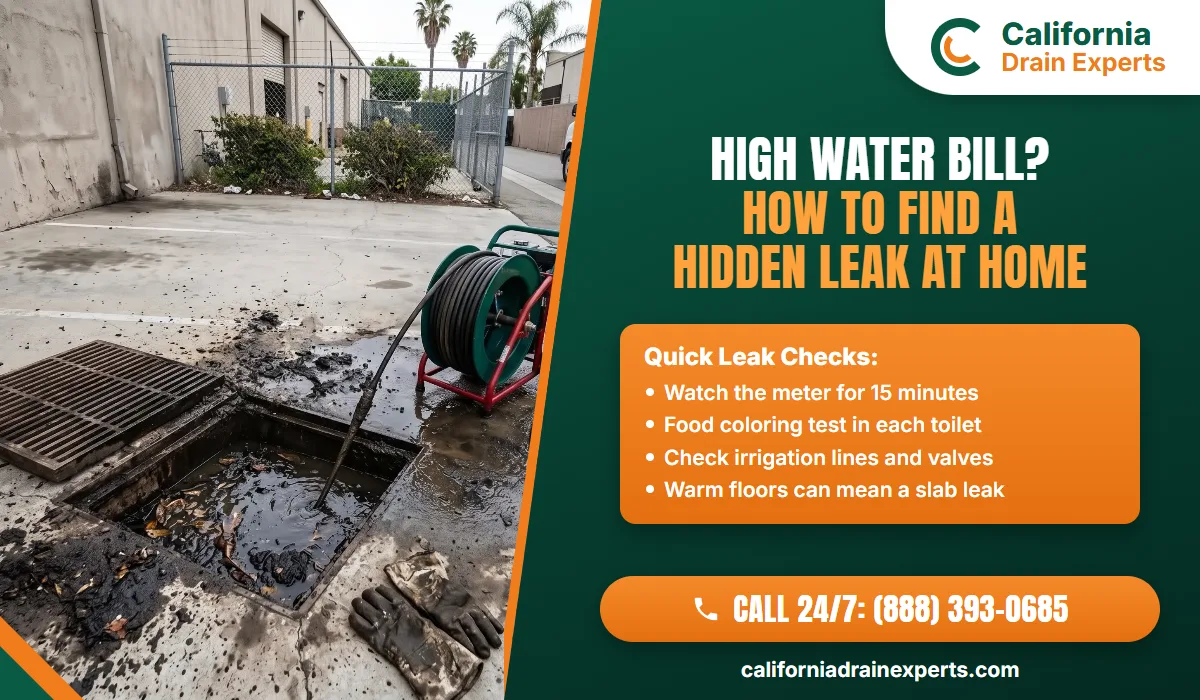
If your water bill jumped and your habits did not change, the most common causes are a running toilet, an irrigation leak or a hidden supply leak, often under a slab. You can narrow it down in about 30 minutes before calling anyone.
Step 1: The Meter Test
Turn off every faucet, appliance and the sprinkler controller. Watch the meter for 15 minutes. If the leak indicator moves, water is being lost.
Step 2: Check the Toilets
Put a few drops of food coloring in each toilet tank. If color shows up in the bowl within 15 minutes without flushing, the flapper is leaking. Our toilet repair page covers the fix.
Step 3: Isolate the Irrigation
Close the irrigation shutoff if you have one, then recheck the meter. If it stops, the leak is in the sprinkler system.
Meter still moving?
We isolate the system and pinpoint hidden leaks before walls or floors are opened.
Call (888) 393-0685Step 4: Look for Physical Signs
- Warm spots on floors (possible slab leak)
- Stains on ceilings or walls
- Wet patches in the yard between the meter and the house
- Hissing sounds in walls
When to Call
If the meter moves with toilets and irrigation ruled out, the leak is likely in the supply lines. A leak detection visit usually costs $250 to $600. If the wet spot is in the yard, see water line repair.
Common Sources of Hidden Water Loss
| Source | How to spot it |
|---|---|
| Running toilet | Dye test shows color in the bowl |
| Irrigation leak | Wet spots, soggy areas or meter stops when irrigation is shut off |
| Slab leak | Warm floor, running water sound |
| Service line leak | Wet patch between meter and house |
| Leaking water heater | Water around the base or a dripping relief valve |
Read Your Bill Carefully
Many Southern California water utilities bill every one or two months and show usage in units, often hundred cubic feet, where one unit is about 748 gallons. Compare the same billing period from last year. A jump of several units with no change in household size or landscaping points to a leak. Many utilities also offer online usage portals that show daily use, which makes a leak much easier to spot.
Irrigation Is the Biggest Hidden Culprit
In Southern California, outdoor watering is a large share of household use. A cracked lateral line, a broken sprinkler head or a valve that does not close fully can waste a lot of water without being obvious, especially on drip systems where leaks hide under mulch. Walk the yard while each zone runs and look for geysers, puddles and dry spots.
What Not to Do
- Do not ignore a meter that moves with everything off
- Do not start opening walls or floors without locating the leak first
- Do not assume the utility made a billing error until you have tested the meter
- Do not keep paying high bills hoping it goes away
What Leak Detection Involves
A professional visit usually starts with the same meter test, then isolates the hot and cold lines, the irrigation and the service line. Acoustic and thermal tools pinpoint the leak so the repair opening stays small. See leak detection for details, or leak detection in San Diego and Orange County if you live there.
After the Repair
Once the leak is fixed, check the meter again with everything off to confirm it has stopped. Some utilities offer leak adjustments on bills when you can show the leak was repaired, so keep your receipt and any written findings.
Checking Your Water Heater
Water heaters can leak quietly. Look for water in the drain pan, rust streaks down the side of the tank, or a relief valve discharge pipe that drips. A relief valve that drips often signals high water pressure. See water heater leaking for how to tell where the water is coming from.
High Water Pressure and Leaks
Many Southern California homes have pressure regulators because street pressure is high. When a regulator wears out, pressure can climb and stress every fitting in the house. A simple pressure gauge on a hose bib shows your pressure. Readings above about 80 psi are worth having checked, and our water pressure repair page explains regulators.
Pool and Spa Losses
If you have a pool, compare its water loss to evaporation with a bucket test. Losing more than evaporation points to a pool leak, which is separate from the house plumbing. See pool leak detection.
A Quick Checklist
- Meter test with everything off
- Dye test every toilet
- Shut off irrigation and recheck the meter
- Look at the water heater pan and relief valve
- Check pressure at a hose bib
- Bucket test the pool if you have one
Need help today?
Call California Drain Experts. The price is confirmed before any work starts.
Call (888) 393-0685Frequently Asked Questions
Why is my water bill so high all of a sudden?
Running toilets, irrigation leaks and hidden supply leaks are the most common causes.
How do I check for a leak with my water meter?
Turn off all water and watch the meter. Movement means a leak.
How much does leak detection cost?
Usually $250 to $600 in Southern California.
Can a running toilet raise my bill?
Yes, a constantly running toilet can waste hundreds of gallons a day.
Local Help
If the meter test shows a leak, our local pages cover leak detection in Los Angeles, leak detection in San Diego, leak detection in Orange County, leak detection in Torrance and leak detection in Palm Springs. Every page has the same 24/7 number, (888) 393-0685.